
Silhouettes & Fit
How silhouettes and fit actually read
A silhouette is the outline a garment makes when someone is wearing it. Fit is the relationship between that outline and a specific body. They are not the same thing, and confusing them is the reason people blame their shape for a problem that belongs to the cut.
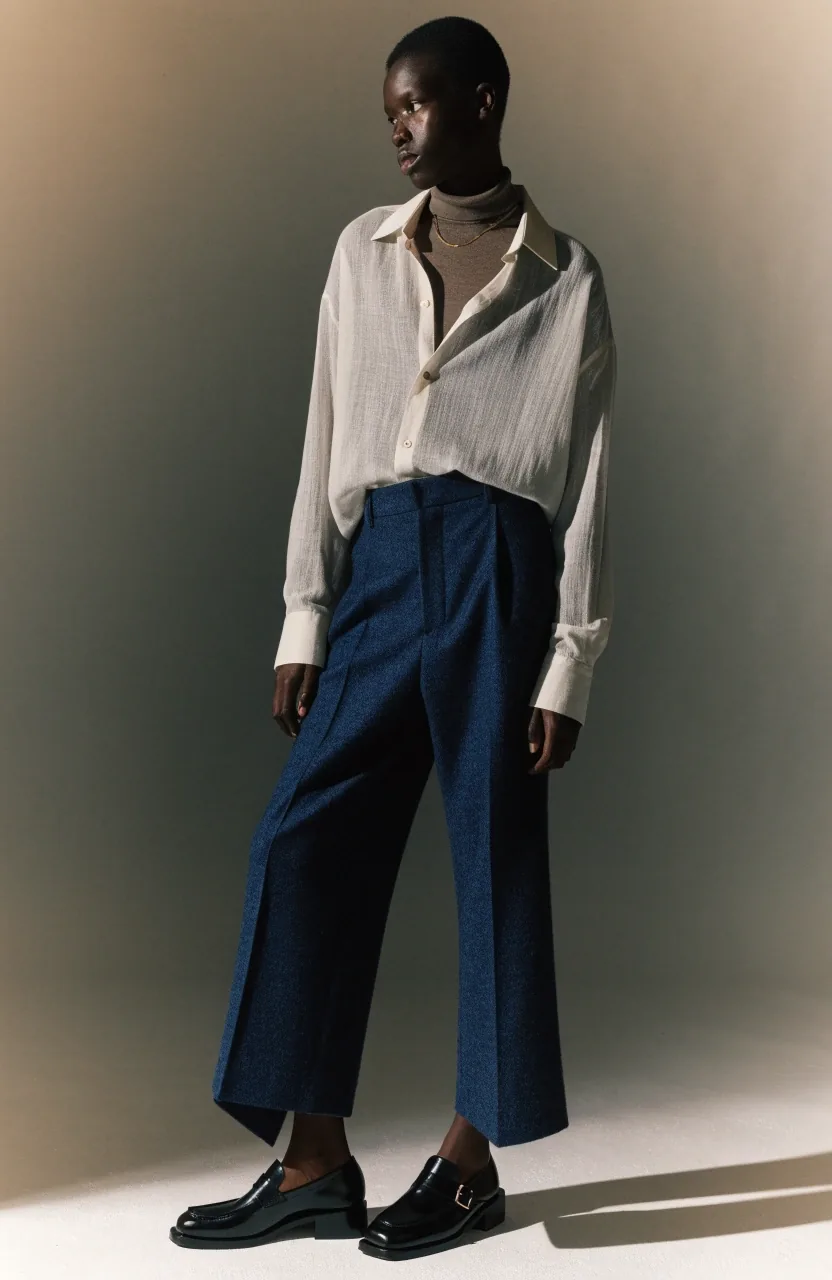
This page breaks down the shapes currently in circulation, from volume and drape to midi lengths and wide-leg trousers, and explains what each one is doing on a body. Read it as a working reference: where the outline is widest, where the fabric stops moving, and where the hem lands.
The four things worth checking
Widest point, shoulder line, hem, and the whole thing in motion.
Most fit complaints come from a mismatch between where the volume sits and where you expected it to sit. If you check four things in order before you decide anything about the garment, you catch that mismatch in the fitting room instead of at home. Nothing on this page is a rule about your body; it is a way to read what a cut is doing.
The sections below work through the outline, then volume, drape and fabric weight, tailoring, midi length, wide-leg trousers, and layering. Each one ends with what to look for, so you can move on quickly when a shape is not for you.
Start with the outline, not the size
Look at the whole shape first
Before you judge a garment, step back and look at the whole shape it creates. Where is the widest point? Where does the fabric stop moving? A coat that is wide at the shoulder and narrow at the hem reads very differently from one that is narrow at the shoulder and wide at the base, even if both are the same size on the label.
The label size describes a measurement, not a proportion. Two garments in the same size can place their volume in completely different places, which is why one feels calm and the other feels like it is wearing you. Step back two paces, look at the outline as a shape rather than at any single part, and ask where your eye lands first.
Most fit complaints come from a mismatch between where the volume sits and where you expected it to sit. That expectation usually comes from a garment you already own and like. Knowing which garment you are comparing against makes the judgment faster and much less personal than it feels in the mirror.
What the outline tells you
Where the widest point sits
Shoulder, chest, waist, hip, or hem. The first place your eye stops is the widest point, whether or not you chose it.
Where the fabric stops moving
A sleeve that ends at the wrist, a hem that ends above the ankle. Movement stops where the outline is being controlled.
Volume: what it does and where it should land
Volume in 2026 is generally softer than it has been, but it still needs an anchor. A relaxed shape works when one part of the outline is controlled: a defined shoulder, a clean hem, a sleeve that ends at the right point. Dries Van Noten's association with a more relaxed approach to silhouette is a good illustration, because the ease there is deliberate rather than accidental.
If you feel swallowed by a loose piece, check the shoulder first. If the shoulder seam sits far past your natural shoulder and the fabric has no weight, the outline will not hold. A lighter fabric with the same cut will drift instead of hanging, which is why two garments in the same shape can behave nothing alike.
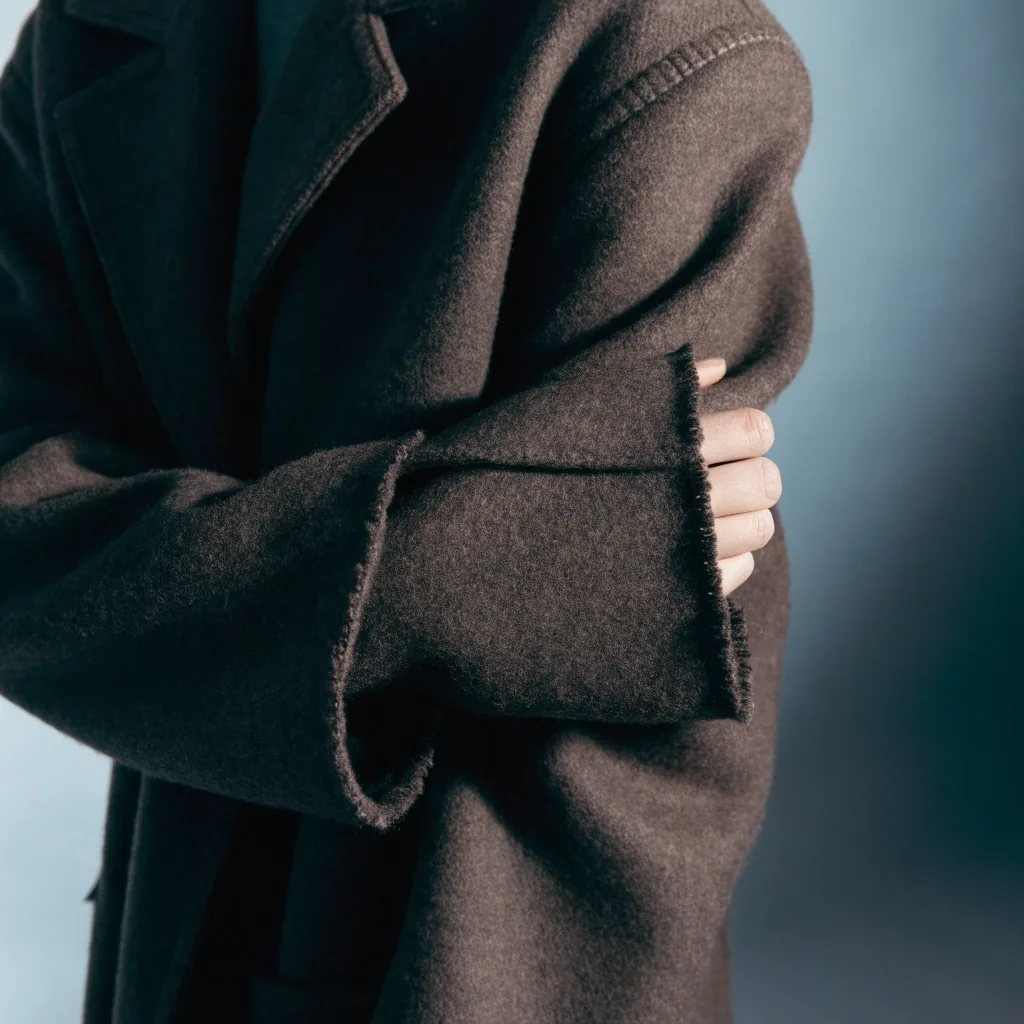
Anchor the volume somewhere: a defined shoulder, a clean hem, or a sleeve that ends where you meant it to.
Drape and fabric weight
What drape means
Drape describes how fabric falls under its own weight. A fluid fabric follows the body and reveals movement; a stiff fabric holds a shape away from the body and creates its own outline. Neither is better. They simply produce different silhouettes from the same pattern.
Same pattern, two outlines.
Why one dress reads two ways
This is why the same dress can look elegant in one fabric and awkward in another. Before deciding a cut does not suit you, check whether the fabric is doing what the design assumed it would.
Check the fabric before the cut.
Reading weight in the hand
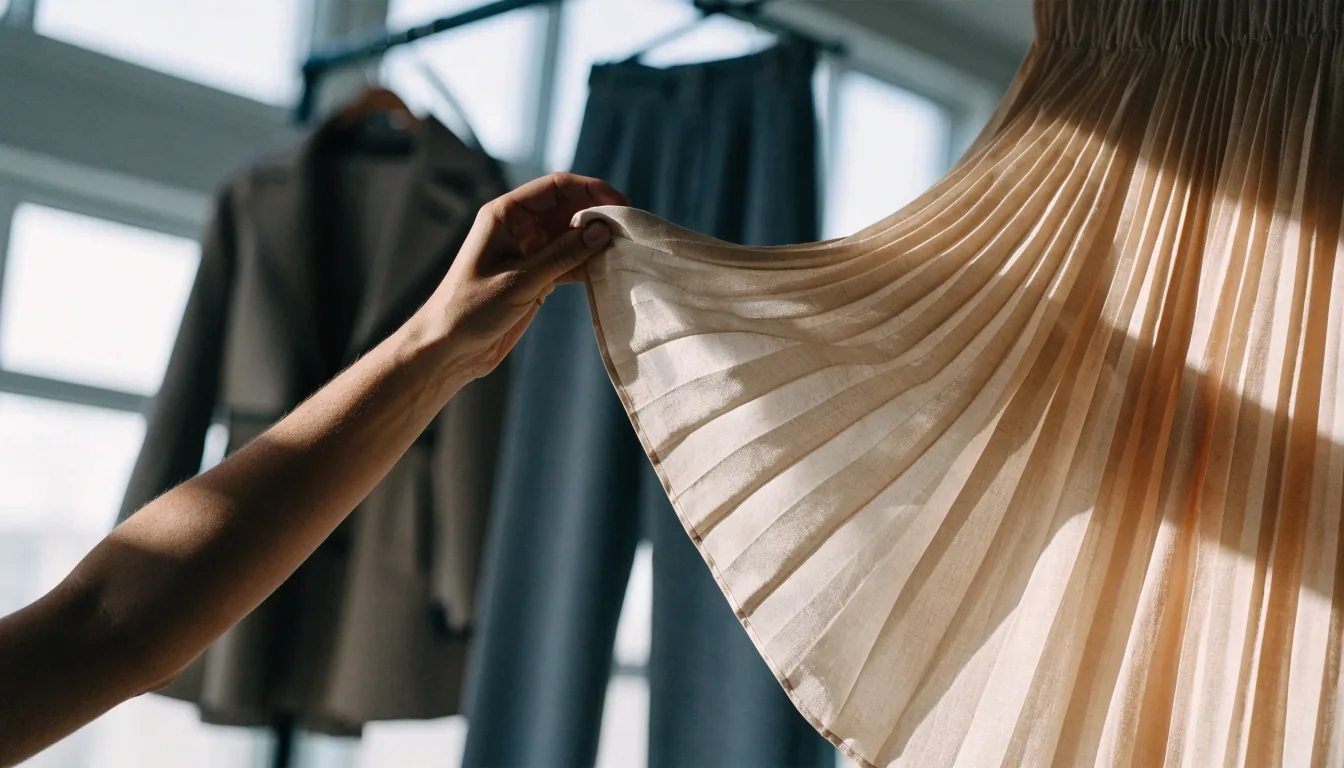
Lift the hem and let it fall. A light fabric will drift and settle; a substantial one will drop and stay where it lands. That single movement predicts most of how the garment will hang on you in the street.
Let the hem fall once.
When weight fights the cut
A cut designed for a fluid fabric will collapse in something heavy, and a cut designed for structure will look deflated in something light. The pattern has an assumption built in. Matching it is most of the work.
Fabric and cut agree, or neither works.
Tailored cut and the softened shoulder
Tailoring is looser than it used to be, but the logic has not changed. A tailored piece controls the shoulder and the waist in relation to each other. Chanel's continued association with skirt suits and bar jackets in 2026 shows how a structured jacket can read as soft when the padding is light and the closure is simple.
The bar jacket is a useful reference shape. It has a defined shoulder, a shaped waist, and a length that ends near the hip, and it explains why tailoring can be worn over a slip or a knit without either piece fighting the other.
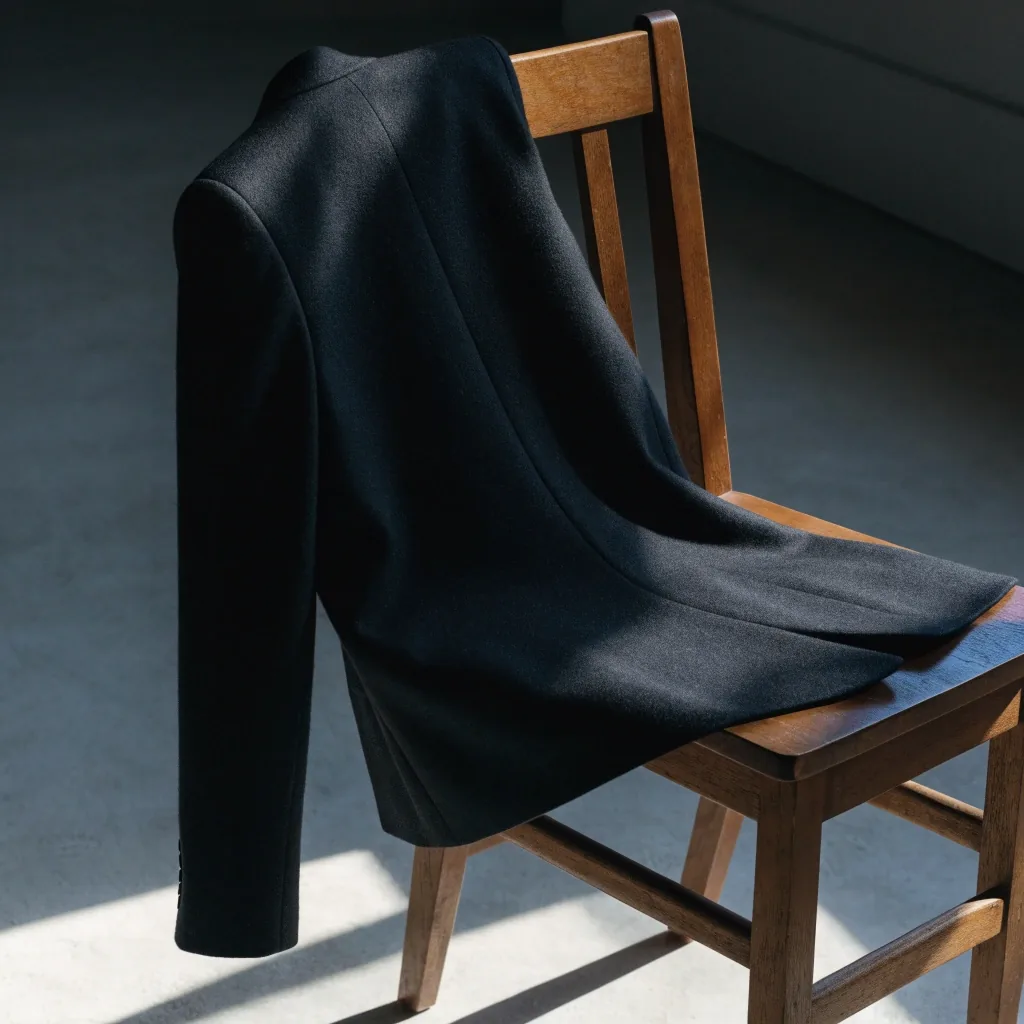
Shoulder
Light padding keeps the line but lets the jacket read soft instead of squared. Check the seam lands on your shoulder, not past it.
Waist
A shaped waist only works if the shoulder above it is controlled. Loose waist plus loose shoulder flattens into one column.
Length
Ending near the hip leaves room for a slip or a knit underneath without either layer fighting the other.
Midi length and where it falls
Midi is a range, not a measurement. In practice it covers everything from just below the knee to mid-calf, and the exact point changes the proportion of the whole outfit. A midi that ends at the widest part of the calf will read differently from one that ends just above it, on the same person and in the same shoe.
When a midi skirt or dress feels off, adjust the hem length before you adjust anything else. It is the single change with the largest effect on how the whole outfit is read, and it costs nothing but a tailor's appointment. Two centimetres of hem is often the difference between an outfit that reads heavy and one that reads clean.
Ending at the widest part of the calf
The hem meets the broadest point of the leg and the eye stops there, so the skirt reads shorter and wider than its actual measurement. It is a proportion effect, not a fault in the garment.
Ending just above or below it
The hem clears the widest point and the leg line reads longer, because the eye continues past the fabric instead of stopping at it. Same person, same shoes, different proportion.
Wide-leg trousers and the balance above
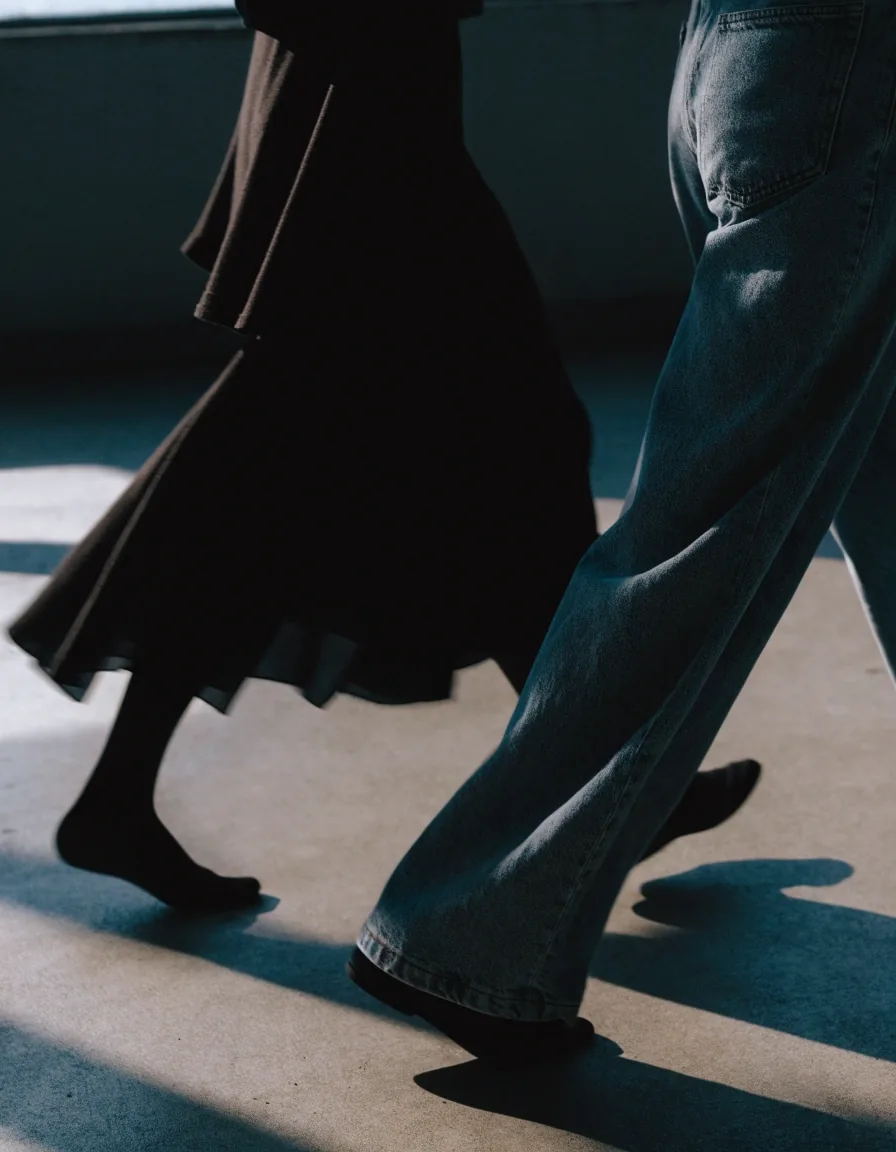
Wide-leg trousers change the relationship between your top and your shoes. The leg line is broad, so the upper half usually needs either a clear shoulder or a defined waist to keep the outfit from flattening into one column. A tucked shirt, a cropped knit, or a structured jacket all solve this in different ways.
Length matters here too. A wide leg that breaks over the shoe reads relaxed; one that stops at the ankle reads sharper. Both are current, and both change the proportion of the same trouser by several centimetres of visible shoe.
What to pair with a wide leg
- A tucked shirtMarks the waist so the outfit does not read as one column from shoulder to hem.
- A cropped knitEnds where the trouser begins, so the eye keeps a clear break between the halves.
- A structured jacketPuts the volume at the shoulder and lets the leg stay broad without the two fighting.
Layering without losing the shape
Layers multiply outlines, which is why layering is where most people lose the silhouette they started with. The working rule is to vary weight. A sheer slip under a heavier knit, a fine shirt under a structured jacket, a light layer over a substantial one. When two layers have the same weight and the same volume, they merge into a single shapeless mass.
Khaite's fall 2026 association with transparency and layered looks is a good example of the principle in practice: one layer is meant to be seen through the other. That only reads when the two layers differ in weight, so the heavier one keeps its outline and the lighter one shows movement inside it.
Read styling notes for layering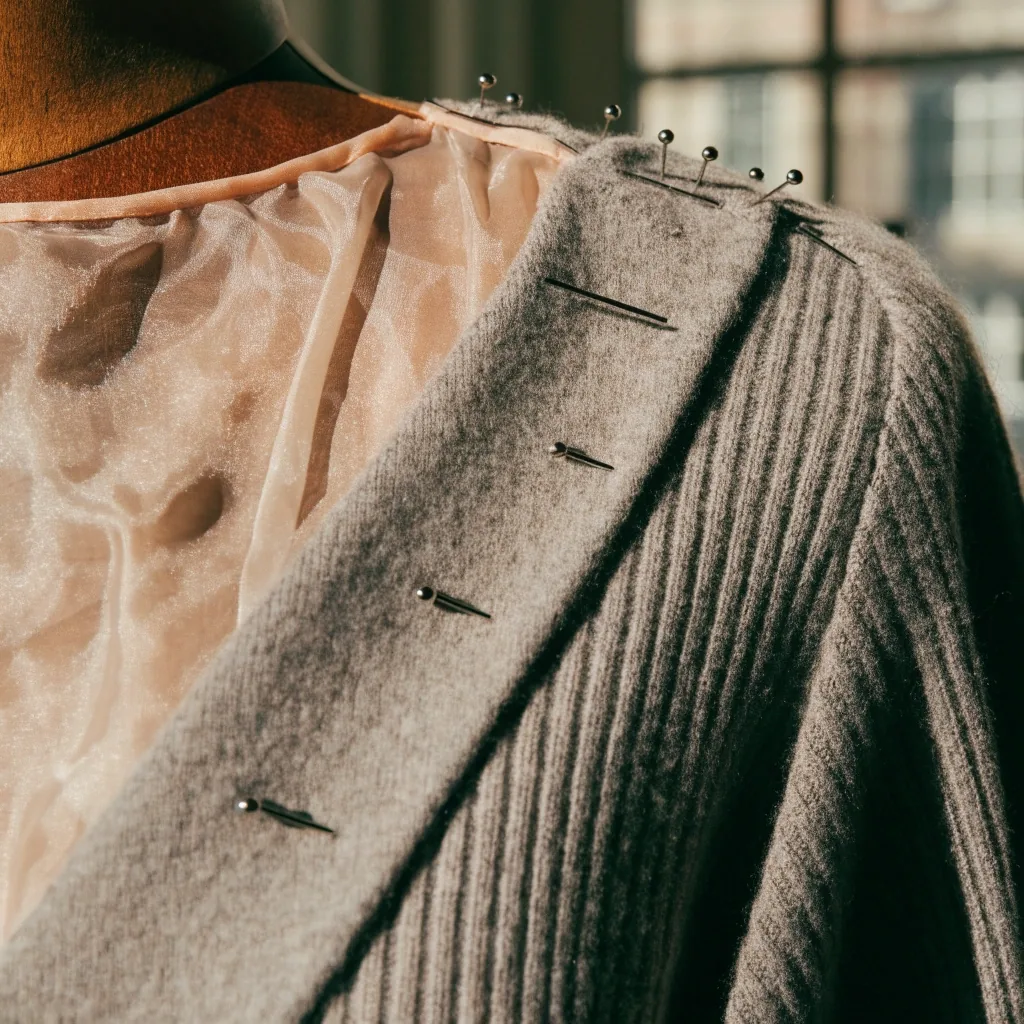
Sheer under heavier
A slip under a substantial knit: the knit keeps the outline, the slip shows at the neckline and hem.
Fine under structured
A fine shirt under a jacket: the jacket controls the shoulder, the shirt adds a clean line at the collar.
Light over substantial
A light layer over a heavy base: the base holds the shape and the top layer only suggests movement.
What to check in a mirror
Look for the widest point of the outfit and decide whether you chose it. Check that the shoulder line is where you want it. Confirm that the hem stops where you intended. Then check the whole thing in motion, because a silhouette that works standing still can fall apart when you walk, sit, or reach for something.
If all four hold, the fit is working, regardless of what the size tag says.
Four checks, in order
- Widest pointName it out loud. If it is not the one you chose, something above it is doing the work instead.
- Shoulder lineIt should sit on your shoulder, not past it. This is the anchor most relaxed cuts need.
- Hem stopWhere you intended it, not where the garment happened to end. Midi hems especially.
- In motionWalk a few steps, sit down, reach for something. Standing still hides most fit problems.
When a trend is not for you
Not every current silhouette will suit every body, and that is not a failure on either side. Volume that lands at the hip will behave differently on someone with a longer torso. A midi that flatters one person will not flatter another. The point of understanding silhouette is to make that judgment quickly and move on, rather than buying something and hoping.
The practical version of this is a short list. Learn the two or three outlines that work on you without adjustment, then treat every new shape as a question against them. A wide-leg trouser is an easy yes if you already know a defined waist works; a midi is an easy pass if the hem keeps landing on the widest part of your calf. Deciding faster is the whole benefit of reading silhouette this way.
Worth a second look
If the same shape keeps failing in the fitting room, the issue is usually volume placement rather than your shape. That is fixable with a hem, a tuck, or a different fabric in the same cut.
If it keeps working, note which of the four checks it passes without effort. That is the outline to build a wardrobe around.
Questions readers ask about fit
Is a relaxed cut the same as an oversized one?
No. A relaxed cut keeps one part of the outline controlled, usually the shoulder or the hem, so the extra fabric has somewhere to sit. An oversized cut simply adds fabric everywhere, which is why it often reads as one shape rather than a designed silhouette.
Does drape mean the fabric is thin?
Not exactly. Drape is about how a fabric falls under its own weight, and a heavy fabric can drape well if it is fluid. The useful question is whether the cloth follows the body or holds a shape away from it, not whether it is light or heavy.
Where exactly should a midi hem land?
Anywhere from just below the knee to mid-calf, as long as it clears the widest part of your calf. If it lands on that point, the hem becomes the widest part of the outfit and the whole look reads shorter and heavier than it is.
Can a wide-leg trouser work with a loose top?
It can, but the outline needs one clear break. A half-tuck, a belt, or a top that ends at the waist gives the eye a place to register the change from the upper half to the leg. Without that, the whole outfit flattens into one column.
Should I size up for volume?
Usually no. Sizing up moves the shoulder seam and the hem, which changes where the volume lands. If a cut is designed with volume, the size that fits your shoulder is normally the one to try first, then adjust the hem or the waist if needed.
Where to go next
Silhouette only becomes useful when you can connect it to what is actually being shown this season, and to how the pieces are worn together. These three pages continue from here, in the order most readers find easiest.
Still unsure about a shape?
Send a question about fit, and we will answer it in plain language with the outline in mind.
NetNugget is an editorial resource, so there is nothing to buy here. If a cut is behaving in a way this page does not cover, write to us and we will work through where the volume is sitting. Reach us at Contact or at info@netnugget.com, Monday to Friday, 9:00 AM to 6:00 PM.